
Upcoming Events
See our upcoming and past events below
When the Money Stops: Foreign Aid Cuts and the Economic Militarization of Civilian Life
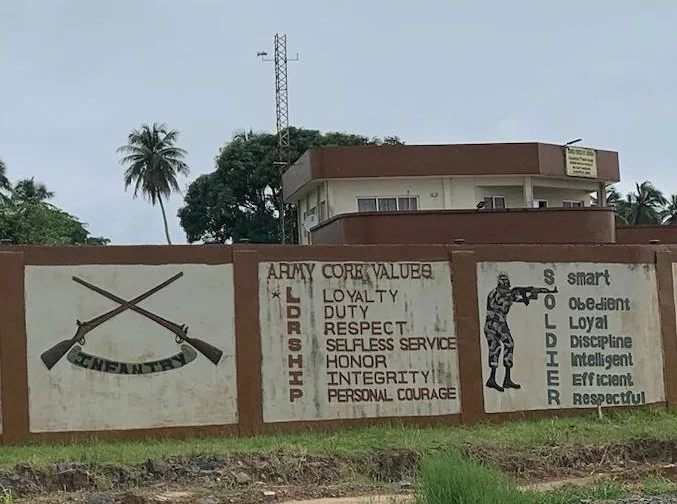
Join us for our next DRGHub event. What happens to a country's civilian economy when foreign aid disappears overnight? Drawing on her multi-year research, Dr. Roya Izadi will present her work on how sudden aid losses create incentives for governments to expand military involvement in business and economic activity, and what that means for democracy, rights, and governance.
Find out more about Dr. Izadi's work: https://royaizadi.com/
Session 1: Making the Case: Democracy as a Security Asset
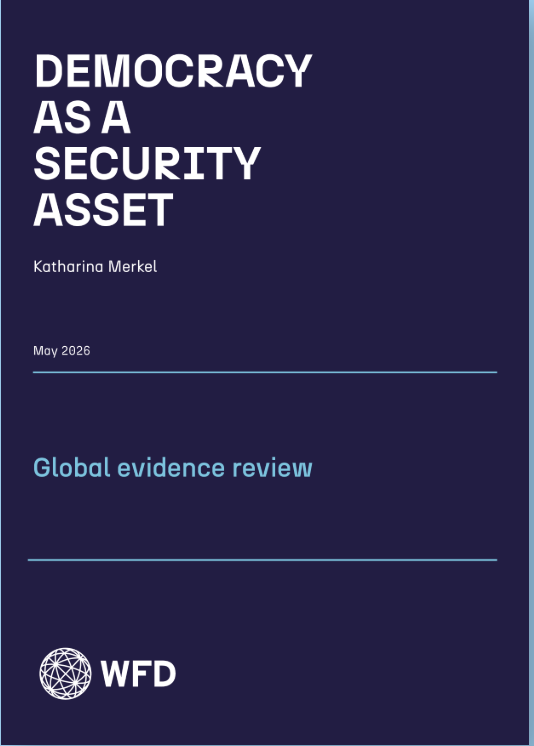
Security debates often treat democracy support as a value rather than a tool. A recent Westminster Foundation for Democracy (WFD) evidence review synthesizing thirty years of research finds otherwise: democracies are less prone to civil war, repression, and coups, and they manage crises better. Katharina Merkel, the review's author, and Dr. Magdalena Randall-Schab of WFD walk through the findings. They explain the mechanisms behind them (accountability, transparency, trust) and what they mean for making the case that democracy support is security investment. Read more: https://www.wfd.org/what-we-do/resources/democracy-security-global-evidence
Session 2: When Security Pressures Reshape Democracy
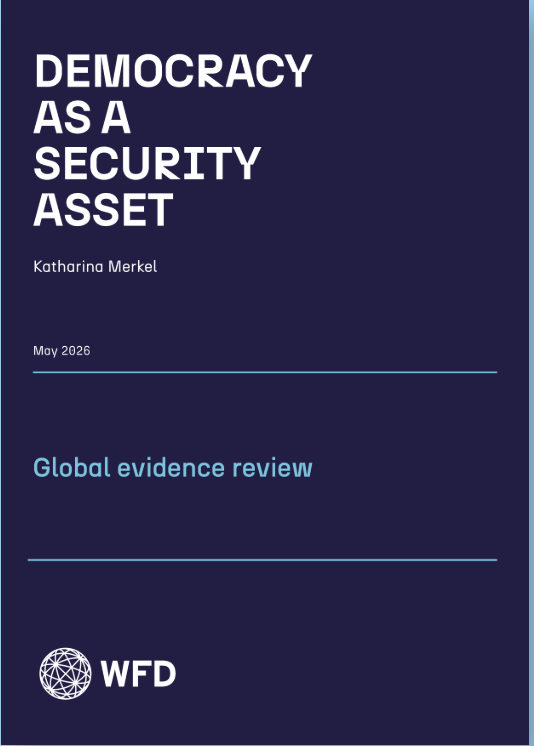
As governments prioritize security, democratic systems change. The Westminster Foundation for Democracy (WFD) evidence review finds that insecurity shifts public preferences, securitizes political competition, expands executive power, and normalizes surveillance and exceptional governance. Katharina Merkel, the review's author, and Dr. Magdalena Randall-Schab of WFD present these findings and discuss what keeps such powers bounded, reversible, and accountable and it's implications.
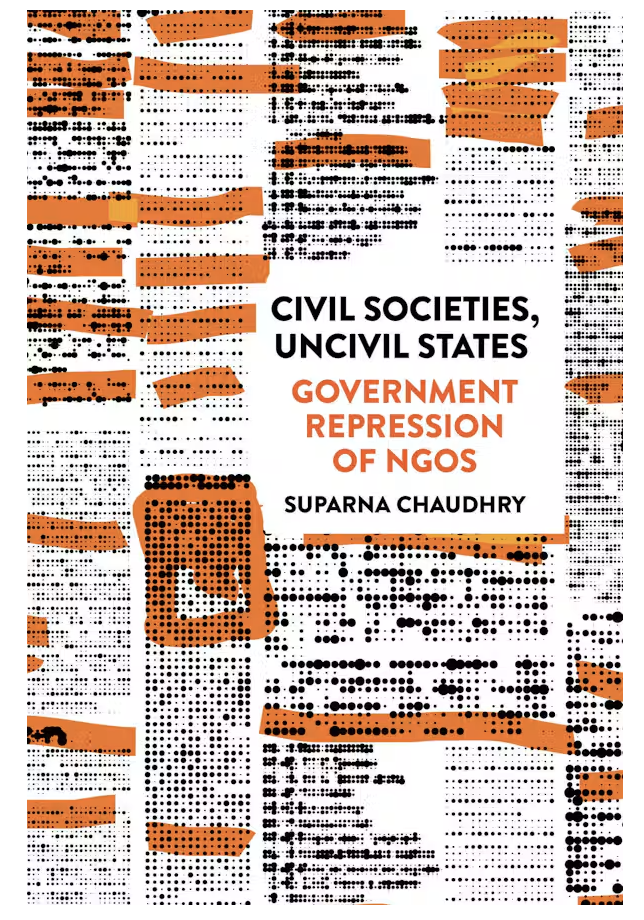
Civil Societies, Uncivil States: Defending Civic Space Under Pressure
Civil Societies, Uncivil States: Defending Civic Space Under Pressure
Please join us for the next DRGHub Talk with Suparna Chaudhry!
Civil society organizations (CSOs) and international NGOs (INGOs) across the world are confronting shrinking civic space and challenges in accessing funding. Governments are stigmatizing activists, choking off funding for NGOs, initiating tax audits, limiting advocacy, and expanding surveillance and media censorship. What explains the increase in these nonviolent or administrative forms of crackdown? How have donors and NGOs responded, and how can we counter this wave of repression? Join Dr. Suparna Chaudhry as she shares insights from new book Civil Societies, Uncivil States : Government Repression of NGOs and discusses how civil society organizations have adapted to increasingly hostile political and legal environments abroad, what funders can do to better support civic space in backsliding or autocratic contexts, and what potential lessons U.S. philanthropy and civil society should learn from their counterparts elsewhere.
The session will be moderated by Daniel Sabet.
-----
Suparna Chaudhry is an Associate Professor of International Affairs at Lewis & Clark College and currently serves as a Director of the Bridging the Gap project. Her research interests include human rights, civic organizations, international law, and political violence. Her work has been published in International Organization, Journal of Peace Research, International Studies Review, International Interactions, Journal of Human Rights, Nonprofit and Voluntary Sector Quarterly, Global Policy, as well as Foreign Policy, The Washington Post and The Conversation. Her book Civil Societies, Uncivil States: Government Repression of NGOs is published with Cornell University Press. She has provided expert testimony at the Tom Lantos Human Rights Commission in the U.S. House of Representatives, and been featured in interviews with National Public Radio, Canadian Broadcasting Corporation, Australian Broadcasting Corporation, and Oregon Public Broadcasting. Previously, she was a Post-Doctoral Fellow at Dartmouth College. She received her Ph.D. from Yale University.
Daniel Sabet is an independent consultant with Eidos Insights Research Partners. He was formerly a member of the Evidence and Learning Team at USAID's Bureau for Democracy, Human Rights, and Governance and is currently researching the consequences of ending U.S. support for DRG. His most recent article is entitled The Impact of Ending U.S. International Media Assistance.
DRGHubTalks: A Pathway for the Democracy, Rights, and Governance Community
From Pressure to Purpose: A Pathway for the Democracy, Rights, and Governance Community
Please join us for the next DRGHub Talks with Barbara Smith and Kourtney Pompi.
In 2025, as a response to dramatic cuts in Democracy, Rights, and Governance (DRG) resourcing, the Carter Center held three convening of DRG experts to examine what comes next for the community. The experts concluded that the unprecedented cuts exposed the vulnerability of existing DRG support models and the urgency of strategic recalibration for the sector. In the convenings' concluding report "From Pressure to Purpose: A Pathway for the Democracy, Rights, and Governance Community" the authors argue that navigating this moment will require shifting weight toward civil society resilience and information ecosystems, redistributing power and resources away from centralized and compliance-heavy models, anchoring democratic legitimacy in lived experience, and investing for endurance rather than short-term stability. In this session, Barbara and Kourtney will dig into the recommendations and next steps proposed by convening participants.
The session will be moderated by Daniel Sabet
Barbara Smith oversees the Carter Center’s democracy, human rights, conflict resolution, and rule of law programs, which operate projects and observe elections in countries across the globe. Before coming to The Carter Center in 2020, Smith was principal and founder of the international development consulting firm Mountain Time Development. She also was a senior associate at the Center for Strategic & International Studies, focused on the Human Rights Initiative, conducting field work and research on civil society. Her wide-ranging career also includes assignments at the United States Agency for International Development, where she co-led the team that created the 2013 Democracy, Human Rights, and Governance Strategy, and with the National Security Council in the White House.
Kourtney Pompi brings more than 25 years of international development experience in over 50 countries to the design, implementation and evaluation of projects that provide citizens with the tools and information needed for them to actively engage their government and press for fundamental freedoms, transparency, and accountability. In 2013, Kourtney founded KP Global Consulting, harnessing the energy, fostering ideas and utilizing local solutions to support partners around the globe to create a world they want to live in. Kourtney also co-leads the Democracy Renewal Group, a community of global democracy and peacebuilding experts using their experience to protect and strengthen democracy for all Americans, serves as a Civic Engagement Fellow with Issue One, and is the State Coordinator for Project HALO.
Daniel Sabet is an independent consultant with Eidos Insights Research Partners. He was formerly a member of the Evidence and Learning Team at USAID's Bureau for Democracy, Human Rights, and Governance and is currently researching the impacts of ending U.S. support for DRG.
The Global Impact of Ending US Support for Independent Media
Join us as Daniel Sabet from the SNF Agora Institute at Johns Hopkins University and Susan Abbott, Founder and Principal at Cross-Pollinate Consulting, present findings from forthcoming research examining the consequences of terminating US foreign assistance to independent media in early 2025. Drawing on 70 interviews and a global survey of 177 media organizations across 44 countries, this session reveals how the sudden withdrawal of the world's largest media donor—representing up to $258 million annually—has devastated newsrooms worldwide. While the financial impacts have been substantial, in some countries the loss of political and diplomatic support for a free press has been more significant. The discussion will explore what this means for the media sector, democracy more broadly, US soft power, and where we go from here. The full study will be published by the Carnegie Endowment for International Peace and available in the coming weeks.
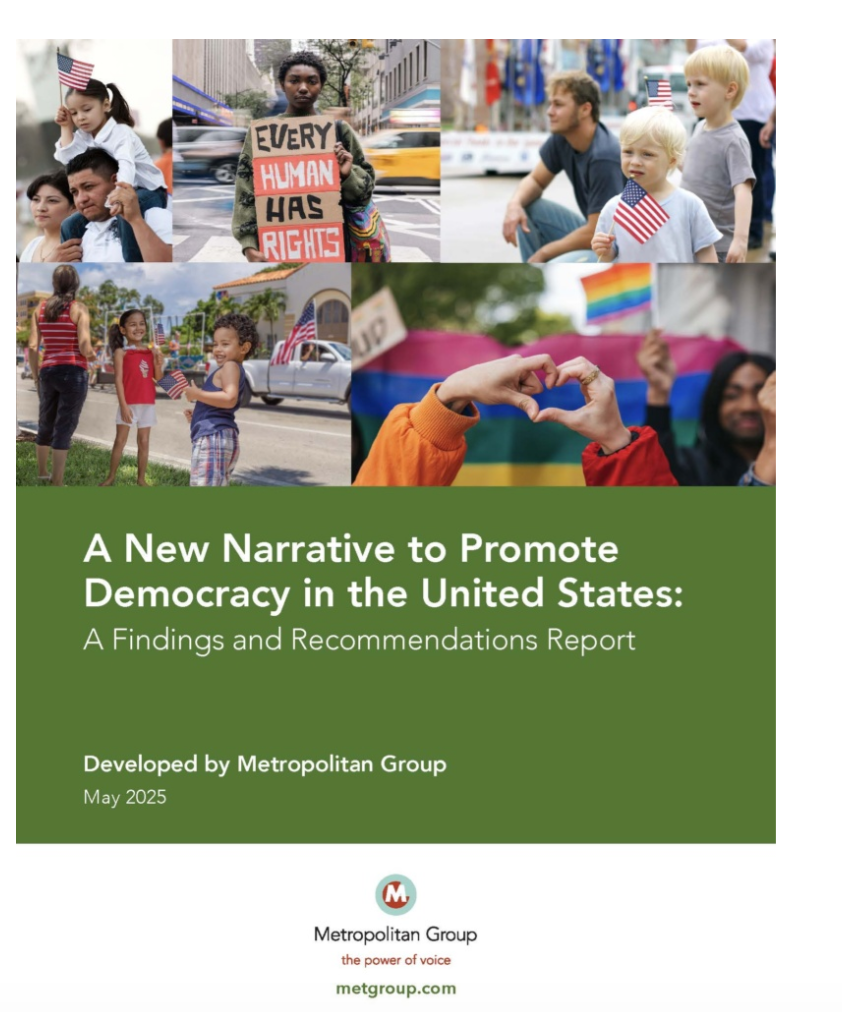
DRGHub: Countering Authoritarian Narratives: Research Insights from the Pro-Democracy Narrative Playbook
Join us as Eric Friedenwald-Fishman from Metropolitan Group will share new US quantitative research findings and insights from the evidence-based U.S. Pro-Democracy Narrative and Message Guide, designed for cross-sectoral use by nonprofits, governments, foundations, and community organizations. The Pro-Democracy Narrative Playbook is a collaborative initiative providing free, research-backed narrative and messaging frameworks to counter authoritarianism and strengthen democratic principles. Discover how narratives shape social norms and either inoculate against or enable mis/disinformation, explore the recommended narrative framework, and learn about opportunities for the DRG community to access these open-source tools, training, and technical assistance to advance democracy across issue areas. The Pro-Democracy Narrative Playbook online hub includes both US and International research, narrative guides, and resources.
DRGHub: Ecosystems for Democracy: Powering Participation through Collective Innovation
As democracy faces mounting challenges worldwide, a growing movement is reimagining how people, institutions, and communities can work together to strengthen participation and trust. This session explores the concept of democratic innovation ecosystems—networks that connect governments, civil society, and communities to co-create and scale participatory solutions.
Josh Lerner will share insights from his recent white paper and People Powered’s work to support these ecosystems around the world (check out Josh's recent article and People Power's video on Community-led climate solutions in the Amazon. Ro will offer a practitioner’s perspective on translating these ideas into real-world action, highlighting lessons from implementing participatory and community-driven initiatives in diverse contexts.
Together, they’ll explore practical strategies for building thriving ecosystems for democratic renewal at home and abroad followed by an open conversation on how participants can apply these principles in their own work.
Bios:
Josh Lerner
Josh is the Co-Executive Director of People Powered: Global Hub for Participatory Democracy, and a leading thinker on participatory and deliberative democracy. His recent work explores how democratic innovation ecosystems can foster collaboration between governments and civil society to make participation more impactful and sustainable. Josh’s ideas have been featured in Nonprofit Quarterly, including his article “Three Emerging Strategies for Renewing Democracy.”
Ro Tucci
Ro is a practitioner and policy leader with over 15 years of experience advancing democracy, governance, and peacebuilding across government and civil society. Until January 2025, Ro served as Deputy Assistant Administrator in USAID’s Bureau for Conflict Prevention and Stabilization, and previously also led USAID’s Bureau for Democracy, Human Rights, and Governance. She has also directed peacebuilding initiatives at the U.S. Institute of Peace, working to bridge policy and practice in building more inclusive, participatory, and resilient democracies.
Chapter on Civic Engagement, Resources and Theory of Change for Citizen Assemblies

Making Participation Stick: Addressing Today’s Challenges Through Democratic Innovation
From climate change to democratic backsliding and inequality, today’s crises demand more than ad hoc consultation, they require institutions that embed citizen voice into decision-making. In this DRGHub conversation, Professor Graham Smith will share insights on how countries are experimenting with permanent citizens’ assemblies, participatory budgeting, and leveraging existing or creating new agencies for public engagement. We’ll discuss what it takes to move beyond pilots and projects, and how mainstreaming participation can build the democratic capacity needed to confront our toughest global challenges.
Graham Smith is Professor of Politics at the Centre for the Study of Democracy. He is founding Chair of the Knowledge Network on Climate Assemblies (KNOCA), advancing the impact of citizens’ assemblies on climate governance. His influential books include Democratic Innovations and We Need To Talk About Climate, and he has been named one of Apolitical’s Top 100 Most Influential Academics in Government.

Defending Democracy: Tools to Counter Authoritarian Narratives
Join Eric Friedenwald-Fishman, Creative Director and Founder of Metropolitan Group, for an essential session on combating the global assault on democratic institutions.
Beyond the Bounce-Back: Rethinking Democratic Resilience in an Age of Volatility
Join the DRGHub, along with EIRP, for a provocative session exploring The Myth of Democratic Resilience, a powerful new article coauthored by renowned scholar Nic Cheeseman. The piece challenges conventional wisdom that democracies naturally recover after authoritarian setbacks.
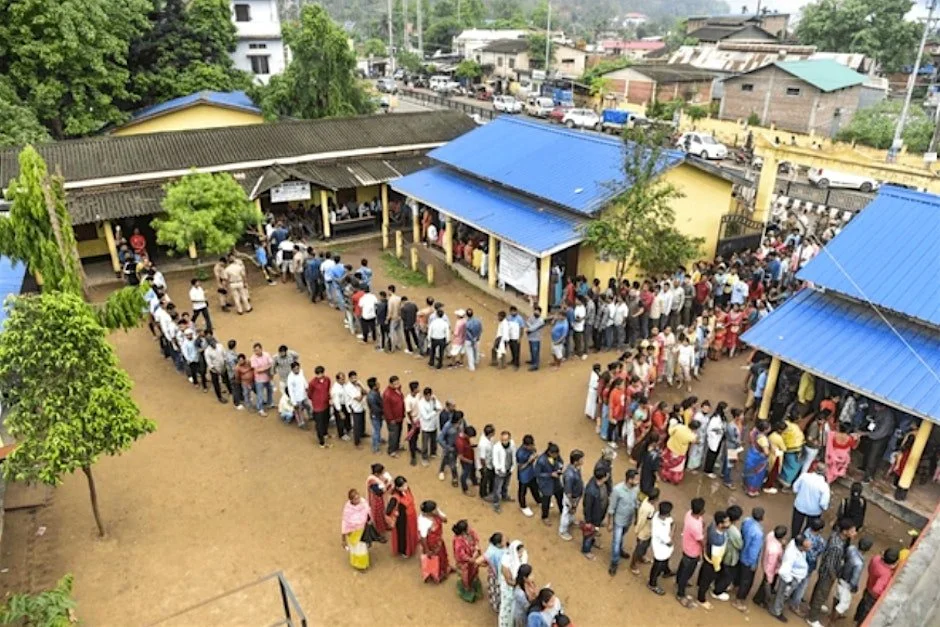
Year of Elections Retrospective
As we reflect on the tumultuous year of 2024, one thing is clear: the state of democracy is at a critical juncture. We will hear from three eminent scholars about the implications of 2024's global elections for the future of democracy.
This event promises to be an insightful exploration of emerging challenges to democratic institutions, the primacy of elections in the democratic process, and the radicalization of policy.
Register online here: https://www.eventbrite.com/e/year-of-elections-retrospective-tickets-1405240134069

Resisting the Slide: What Works Against Democratic Backsliding with Rachel Beatty Riedl
When democracy is under attack, what sparks resistance—and what actually stops it? Drawing on the new DARE dataset, Paul Friesen and Rachel Beatty Riedl map out the tactics of backsliding regimes and the strategies that successfully push back. From courts to coalitions, this research reveals which actors are most effective, when they step in, and how institutional strength and legislative control shape the outcomes. Join us for a one-hour discussion with Rachel on their research and we explore what a data-driven roadmap for defending democracy might look like.